
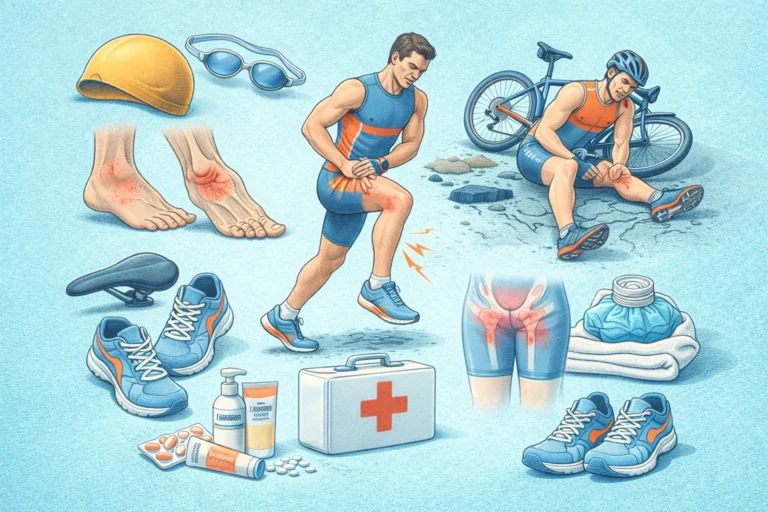
Triathlon athletes face a mix of challenges that can lead to pain and time off from training. This article on triathlonhealth injuries explains what goes wrong, how to spot problems early, and clear steps to recover and return stronger. You will find practical advice on training, gear, recovery, and mental fitness, written in plain language for athletes at every level.
Common triathlonhealth injuries
Triathletes often report similar problems across the swim, bike, and run. Some injuries come from one discipline. Others appear from repeated stress across all three. Knowing the common issues helps you catch them early and treat them correctly.
Overuse injuries are frequent, especially in the knees, Achilles tendon, and lower back. You will also see shoulder pain from swimming and wrist or hand numbness from long rides. These problems often start small and get worse with continued training without adjustment.
Hard crashes and collisions cause acute injuries like fractures, cuts, and severe sprains. Open-water swim incidents can trigger ear or sinus issues. A clear plan for both overuse and acute events reduces the time you lose to injury.
Below is a practical list of the most common triathlonhealth injuries and brief notes on why they occur and how they often present.
Use the list to check symptoms and decide whether to change training or seek help.
- Runner’s knee (patellofemoral pain), pain around the kneecap after runs or long rides.
- Achilles tendinopathy, stiffness and pain above the heel that worsens with activity.
- Plantar fasciitis, heel pain on first steps in the morning or after long sessions.
- IT band syndrome, lateral knee pain during the run that builds with distance.
- Shoulder impingement, pain with overhead movement and during the swim.
- Lower back strain, tightness after long rides or brick workouts.
- Hand numbness or ulnar neuropathy, tingling during or after long bike efforts.
Causes and risk factors
Understanding why triathlonhealth injuries happen helps you reduce risk. Causes are usually a mix of training load, technique, equipment, and recovery. Each factor matters on its own, and they add up quickly when ignored.
Training errors rank high. Too much volume, sudden jumps in intensity, or repeating the same session day after day are classic triggers. Even smart athletes make triathlonhealth mistakes by increasing load too quickly or skipping recovery weeks.
Technique plays a big role. Poor swim mechanics can overload the shoulder. Bad bike fit transfers stress to the back and neck. Running with weak hips or poor foot strike adds force to the knees and calves. Fixing form reduces strain and improves efficiency.
Other risk factors include improper equipment, shoe wear, and life stress. If you travel a lot, sleep poorly, or have a heavy work schedule, your body recovers slower. That raises the chance of an injury when training stays intense.
Recognizing injuries early
Spotting issues early prevents many setbacks. Small, recurring aches deserve attention. Do not ignore pain that changes your movement or lasts more than a few sessions. Early care is often simple and effective.
Look for warning signs like pain that starts during activity and does not ease with rest, swelling, persistent stiffness, or a change in performance. Pay attention to soreness that moves from one area to another or grows sharper over time.
If you track training data, sudden drops in power, pace, or heart rate response may hint at developing problems. These objective changes, paired with physical symptoms, make a stronger case for early evaluation.
Here are clear red flags that suggest you need to stop and assess before training on.
Use this list to decide when to back off or seek care from a clinician.
- Sharp or shooting pain during an activity that forces you to stop.
- Swelling or redness that increases after workouts.
- Persistent numbness or weakness in a limb.
- Loss of normal range of motion in a joint.
- Fever with local pain, which can indicate infection after a wound.
On-course care and first steps

Immediate steps can limit damage and speed recovery. If something hurts during a session, stop and assess. Switching to a lower-impact mode can keep aerobic fitness without worsening the injury.
Basic first aid helps many acute problems. Rest, ice, compression, and elevation still work for many sprains and impact injuries. Use these measures early, and seek medical advice for deeper cuts or suspected fractures.
For overuse pain, reducing volume and intensity often brings relief. Replace high-impact sessions with pool swims, aqua jogging, or easy spinning. Active rest like that keeps conditioning while you address the cause.
Below is a short list of practical first steps to use on the course or right after a session.
Keep these actions simple and repeatable so you can act quickly when needed.
- Stop the activity and check how the body feels.
- Apply ice for 10 to 20 minutes if swelling or sharp pain is present.
- Use compression and rest the injured area to reduce inflammation.
- Replace running with low-impact cross-training if pain persists.
- Seek urgent care for severe pain, deformity, or uncontrolled bleeding.
Rehab and triathlonhealth recovery
Rehab aims to remove pain and restore full function for swim, bike, and run. Good rehab blends movement, strength, and progressive loading. It focuses on the exact tasks you need for triathlon.
A typical plan begins with pain control and gentle mobility. Next, clinicians add muscle activation and basic strength. Finally, you return to sport-specific loading with controlled increases in volume and intensity.
Working with a physiotherapist speeds recovery and lowers the chance of repeat injury. A clinician can assess movement patterns and prescribe targeted exercises you can do at home or the gym.
Here is a practical list of common rehab steps that help many triathletes return to full training.
Follow progression carefully and avoid rushing back to full sessions too soon.
- Rest and protected activity until pain settles.
- Mobility drills for the affected area to restore range of motion.
- Targeted strength work for weak or inhibited muscles.
- Functional movement drills that match swim, bike, or run demands.
- Gradual return-to-run or bike plan with monitored increases.
Training changes for injury prevention
Smart training reduces triathlonhealth injuries more than any single gadget. Plan gradual increases, include recovery weeks, and vary the load. Small, steady steps prevent big setbacks.
Cross-training is a powerful tool. Adding pool sessions or easy spinning lowers joint stress while keeping fitness up. When you replace some runs with swim or bike work, you maintain endurance but give tissues time to repair.
Strength work should be a core part of your week. A simple program that targets hip, glute, core, and posterior chain muscles improves movement and resilience. Keep sessions short and targeted to match your training load.
Below are practical training rules to lower risk and keep you consistent through the season.
Use these as a checklist when you plan the next month of training.
- Follow a weekly and monthly plan with built-in recovery weeks.
- Increase load by no more than 10 percent per week across total training stress.
- Include two to three targeted strength sessions weekly.
- Mix high-intensity days with easy aerobic work and technique sessions.
- Schedule complete rest or active recovery after long races or hard blocks.
Triathlon gear and maintenance
Equipment affects comfort, performance, and injury risk. Proper bike fit tops the list. A poor fit changes your posture and can cause neck, back, and hand problems. Expect to adjust saddle height, reach, and handlebar position with a fitter.
Shoes also matter for injury prevention. Replace running shoes at the signs of midsole breakdown and rotate pairs if you train a lot. Proper footwear reduces impact loads and supports better mechanics. This is basic triathlon gear maintenance that pays off in fewer aches.
Regular checks and simple fixes keep gear reliable and safe. Clean your chain, inspect bolts, and address any unusual noises. Good routine saves time and reduces stress on race day. If you face issues, follow structured steps to find the cause.
Here is a short list of gear checks and tasks that every triathlete should do regularly.
These items reduce the chance of an equipment-related problem causing an injury or a race DNF.
- Regular bike fit review and follow-up after changes in flexibility or weight.
- Triathlon gear maintenance like checking tire pressure, brake pad wear, and chain condition.
- Replace running shoes on signs of wear and match shoes to run volume.
- Practice transitions and check wetsuit fit to avoid chafing or restricted breathing.
- Use padded shorts or gloves for long rides to avoid numbness and soft tissue stress.
Mental strategies and triathlonhealth mental fitness
The mental side matters for both injury risk and recovery. Stress, lack of sleep, and poor focus reduce your ability to tolerate training. Build simple habits that boost triathlon mindset and support consistent training.
Mental fitness helps when injury happens. Staying calm and planning a step-by-step return makes recovery faster and safer. Mental resilience triathlon skills like goal setting, small wins, and positive routines keep you engaged even on slow days.
Use short mental exercises before sessions to focus on technique and form. This reduces careless movements that lead to trips, falls, or poor posture. If you struggle emotionally after an injury, reach out to peers or a coach to keep perspective and motivation.
Below are practical mental tools you can use during recovery and daily training.
These techniques support both performance and long-term health.
- Set clear, achievable short-term goals for rehab and training.
- Practice breathing and focus drills before hard or technical sessions.
- Celebrate small improvements to build confidence and momentum.
- Keep a training log that includes sleep, mood, and pain to spot patterns.
- Engage with a training partner or coach for accountability and support.
When to see a medical professional
Many issues respond to rest and smart training choices. Some problems need professional care. You should see a doctor or physiotherapist when pain limits daily life, gets worse, or you suspect a structural injury.
Imaging like X-rays or MRI can be useful for certain injuries, but not always needed. A clinician will use a careful exam and your training history to guide testing. Early referral often shortens recovery compared with repeated trial-and-error at home.
Specialists such as sports physicians, physiotherapists, and podiatrists can provide targeted plans. They work with coaches to adjust training and with bike fitters to correct equipment issues. This team approach speeds safe return to sport.
Use this short checklist to decide if you need a medical review now.
If in doubt, err on the side of assessment when symptoms are persistent or worsening.
- Pain that prevents normal walking, swimming, or riding after rest.
- Visible deformity, severe swelling, or loss of function.
- Numbness or progressive weakness in an arm or leg.
- Repeated injuries in the same area despite conservative care.
- Concerns about infection, deep tissue damage, or bone injury.
Key Takeaways
Triathlonhealth injuries are common, but they are also manageable with the right plan. Early recognition, measured training changes, and timely rehab get athletes back faster. Use simple rules to reduce risk and protect your racing calendar.
Pay attention to technique, equipment, and recovery. Include strength work and recovery weeks, and treat small pains before they grow. Practice triathlon gear maintenance and basic first aid so equipment and acute issues do not become bigger problems.
Work on your triathlon mindset and build triathlonhealth mental fitness into daily life. Mental resilience triathlon skills help you stay consistent, cope with setbacks, and follow a safe return-to-sport plan after an injury. If you feel uncertain, consult a clinician to guide rehab and return-to-training.
Use this guide as a roadmap to prevent and recover from triathlonhealth injuries. With clear habits, good gear care, and a steady plan, you can reduce downtime and stay on track with your goals.
For ongoing help, track your training, note any triathlonhealth mistakes you make, and adjust early. Combine those notes with professional feedback to protect your long-term performance and well-being.