
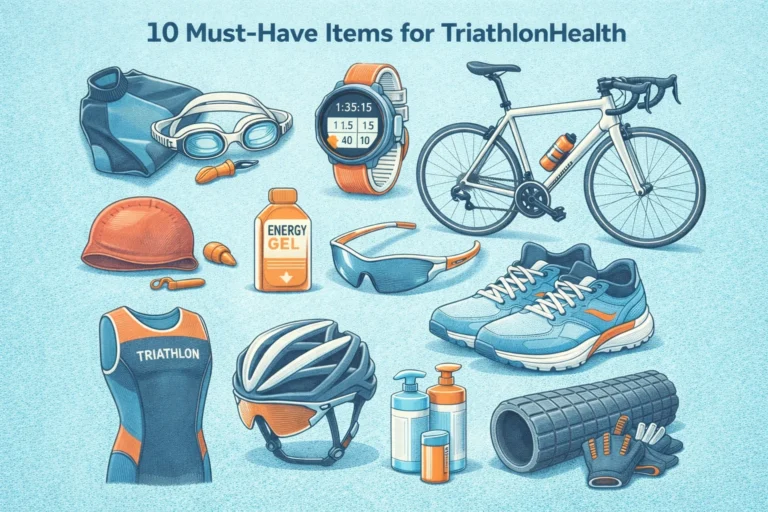
Any triathlete preparing for race day wants gear they can trust. This article lists the triathlonhealth must-have gear every athlete should consider, from wetsuits to race watches and transition bags. Read on for expert advice, buying tips, and items that will help you perform and finish strong.
Why triathlonhealth must-have gear matters
Good gear reduces stress on race day. The right wetsuit, bike, and shoes let you focus on pacing, technique, and strategy, not equipment failure. For triathletes, small advantages add up. Choosing the correct kit can save time in transition and cut seconds off each leg.
Gear also protects your body. A proper helmet protects the head while an aero helmet improves speed on flat courses. Shoes with the right support reduce the risk of injury in training and on race day. Quality gear gives you confidence to push harder without unnecessary risk.
Finally, buying decisions affect training and budget. A durable bike might cost more initially but will last many seasons. A versatile tri suit can be used in training and races, making it a wise purchase for many athletes. Thinking ahead about durability and fit helps you get value from each item.
How we chose these items
We focused on performance, durability, and value. Each item in the list was chosen based on real-world use by triathletes and professional input from coaches and gear techs. We looked for products that offer measurable benefits on race day and during training.
We also considered accessibility. Not everyone has a pro budget. That is why the list includes options and features to look for at different price points. Knowing what to prioritize helps you spend wisely and build a kit that suits your goals.
Finally, we tested common pain points. Items that simplify transitions, improve comfort, or reduce fatigue earned priority. For example, a race belt that fits easily over a wetsuit or a GPS watch with multi-sport mode are small items that add up to better race performance.
triathlonhealth must-have gear: 10 items
Below are the ten essential pieces of equipment that most triathletes should own. This list balances swim, bike, run, and transition needs. It aims to serve beginners through experienced racers who want reliable, race-ready gear.
Before we begin the item-by-item breakdown, here is a short lead-in sentence to introduce the list. Use this as a checklist when planning purchases and packing for race day.
1. Wetsuit
A good wetsuit improves buoyancy and reduces drag in open water. Many athletes gain significant speed from a properly fitted wetsuit. Fit matters more than brand. A suit that rides up or pinches will slow you down and make sighting harder.
Look for flexibility in the shoulders and chest for efficient stroke mechanics. Thicker panels on the legs add buoyancy, while thinner neoprene in the shoulders helps with range of motion. Open-cell lining near the face can improve comfort and seal, especially in cooler water.
When choosing a wetsuit, try several sizes and models. If you need comparison shopping notes, check our triathlonhealth wetsuit comparison for common styles and fit tips. That comparison shows which suits work well for different body types and race conditions.
Key features to consider include neck seal comfort, ankle fit to help with transitions, and how the suit feels when you try to reach forward. Many triathletes practice getting out of their wetsuit quickly, since transition speed can be improved with a suit that pulls off easily.
Before race day, swim several times in your new wetsuit. That helps you find any chafing points and learn how it affects your stroke and breathing. If the wetsuit limits your catch or causes excessive fatigue, try a different cut or brand.
2. Tri suit
A tri suit is the workhorse for training and racing. It is worn for all three legs, so comfort and fit matter. A well-fitted tri suit avoids hotspots and is designed for fast transitions and long hours on the bike and run.
Look for fabrics that dry quickly and resist chafing. The chamois should be minimal for comfort while cycling but not get in the way for the run. Many modern suits use thin pads or quick-dry materials to balance comfort between legs.
Try different cuts and sizes. Some suits have full zippers for ventilation, others use short zips. Compression fits help with muscle support; looser fits may be better for longer distances. Your choice depends on race distance, climate, and personal comfort.
Make sure pockets are accessible on the bike if you plan to carry gels or small items. Many suits include discreet rear pockets for on-the-bike nutrition. Consider the suit’s UV protection and seam placement to avoid rubbing under the arms or at the shoulders.
3. Race bike and essential bike gear
Your bike is the single biggest investment that affects overall race time. A well-fitted bike reduces fatigue and improves power transfer. Fit sessions with a bike fitter are worth the cost for serious triathletes.
Essential bike gear includes clip-in pedals, aerodynamic wheels when possible, and a comfortable saddle that matches your sit bone width. Tire choice matters too: pick tires that balance rolling resistance and puncture protection for your local roads.
Maintenance items like chain lube, cleaning tools, and a regular tune-up schedule extend the life of your bike. A professional tune before a big race helps avoid mechanical issues on race day. If you cannot afford frequent servicing, learn basic maintenance to keep the bike safe and reliable.
For race-day setup, practice mounting and dismounting with race shoes, and practice cornering on the course if possible. Good bike handling skills save energy and reduce the chance of crashes, which are the biggest race-day risk for triathletes.
4. Helmet and aero helmet upgrades
A helmet is legally required and must fit correctly. A proper helmet sits level on your head and straps snugly under the chin. The helmet should not tilt backward or forward when you move your head. Comfort and ventilation help on hot race days.
Aero helmets provide aerodynamic advantage on flat and fast courses. They reduce drag but can be warmer, so weigh that trade-off for the event. Try an aero helmet in training to get used to the reduced ventilation and field of view.
When selecting a helmet, check for safety certifications and replace it after any crash. Replace helmets after several years of use, even without impacts, because materials degrade. Fit is non-negotiable: even the most aerodynamic helmet is useless if it causes headaches or pressure points.
Consider helmet accessories like sunglasses retention and removable liners. These small choices can improve comfort and make it easier to wear the helmet for long rides and hot races.
5. Running shoes and race flats
Comfort and fit are the two main priorities for running shoes. Your shoe should match your gait, foot width, and race distance. Practice runs in your race shoes to be confident they will not cause blisters or discomfort on race day.
Race flats or lighter shoes can save weight and improve turnover for shorter races. Long-course athletes often choose slightly more cushioned models to reduce fatigue. The right shoe depends on your training load, foot strike, and personal feel.
Replace shoes regularly. Typical lifespan is 300 to 500 miles depending on the shoe and runner. Worn out midsoles reduce cushioning and increase injury risk. Keep a rotation of shoes if you train frequently to extend each pair’s life.
Do a few brick workouts in your selected shoes after cycling. That helps you judge if the shoes work well immediately after the bike leg. The transition from bike to run can reveal tightness or discomfort you did not notice in isolated runs.
6. Swim goggles and swim cap options
Clear vision in the swim affects direction, sighting, and confidence. Pick goggles that fit your face without leaking. Anti-fog coating and interchangeable nose bridges help get a good seal and correct fit across brands and models.
Tinted or mirrored lenses work well in bright conditions. Clear lenses help in low light or cloudy days. Have a backup pair for race day. Many athletes tape a cheap pair inside the transition bag just in case their primary goggles break or fog badly.
Swim caps are often provided by organizers, but a spare cap is a good idea. Some swimmers use two caps for extra warmth or to keep goggles more secure in cold water. A silicone cap is durable and offers a smooth fit, while latex is cheaper and fits tight.
Practice sighting with your goggles and cap on. Strongly test them in open water if possible, since pool comfort does not always translate directly to open water conditions where waves and currents are factors.
7. Nutrition and hydration systems
Nutrition planning is a common source of race-day problems. A simple plan with tested products is safer than an experimental approach. Know how many gels, chews, or bars you need and when to take them during the race.
Hydration systems range from bottles to aero-mounted solutions and hydration packs for long courses. Choose what fits your bike and feels comfortable during training rides. Practice consuming fluids at race pace to avoid stomach trouble.
Electrolyte balance matters, not just calories. Use drinks that match your sweat rate and the duration of the race. Taste and mixability are important too. If a product is hard to swallow during the race, you will not use it even if it has the right ingredients.
Organize nutrition in your transition area so you can grab items quickly. Race belts, easy-open gel packets, and marked bottles make transitions smoother. Test your setup in brick sessions to check for compatibility and ease of use.
8. GPS watch and timing devices
A GPS watch tracks pace, distance, and transitions. For commercial buyers, look for features like multi-sport mode, battery life, and easy data transfer. Coaches and experienced athletes use watch data to pace properly and make strategy adjustments during the race.
Accuracy matters, but so does battery life. For long-course races, battery life must exceed expected finish time with margin. For sprint and Olympic distances, the newest feature sets matter less than reliability and simple operation under race stress.
Many watches offer connectivity with power meters, heart rate straps, and cycling sensors. Decide which integrations you need ahead of purchase. Extra sensors add cost, but they provide better insights for training and pacing on race day.
Practice using the watch in training. Familiarize yourself with how it changes modes and how to start transitions. Few things are worse than fumbling the watch under pressure. Set up race screens so the data you need is visible at a glance.
9. Transition bag and race-day organization
A tidy transition area saves time and stress. A purpose-built transition bag keeps gear organized and easy to find. Look for compartments for shoes, helmet, nutrition, and a wet pocket for your wetsuit or swimwear.
Prepare a checklist and layout your gear exactly as you plan to use it in transition. Practice setup at home to ensure you can find everything quickly. Marking items or using colored tape can help you spot gear under pressure.
Comfort items like a small towel for drying feet or a change of socks can be helpful on longer days. A light plastic bag to keep damp clothing separate helps when packing up after the race. Keep extra safety pins and a small roll of duct tape for last-minute needs.
Train transitions. Run through setting up the bag and moving between swim-to-bike and bike-to-run in practice. Better transition skills can save a minute or more on race day and reduce anxiety when the clock is running.
10. Tools, spares, and safety kit
Mechanical issues happen. Carry a small kit with a spare inner tube, CO2 inflator or mini pump, tire levers, and a multi-tool. For longer races, add a patch kit and chain quick-link. A reliable kit will keep you moving in case of minor mishaps.
Safety items include basic first-aid supplies, a small roll of tape for blisters, and an emergency contact card in your transition bag. Know event procedures for more serious problems and have local emergency numbers handy if you are traveling for the race.
Practice using the tools you carry. Changing a tube under stress is easier if you have done it often in training. Keep your kit organized so you can find items quickly when a problem arises on course or during warm-up rides.
Check and top up your supplies regularly. Batteries, CO2 cartridges, and sealant can expire or lose charge. A pre-race checklist helps ensure nothing essential is missing on race morning.
Buying tips and budget priorities
Not every athlete needs top-tier gear immediately. Start with items that affect safety and comfort: helmet, shoes, and a proper bike fit. These choices reduce injury risk and improve training consistency, which pays off over time.
Next, prioritize items that save time on race day, like a quick-release wetsuit or a well-organized transition bag. Time saved in transition is pure race gain and often costs less than aerodynamic upgrades.
For expensive items, consider used gear with proven history. A well-maintained previous-generation bike or quality wetsuit often gives excellent value for money. However, be cautious with used helmets; they should be replaced after any crash, and older helmets may not meet newer safety standards.
Finally, allocate budget for regular replacements like running shoes and consumables like nutrition. Those recurring costs are part of the sport and should be budgeted for the season.
Maintenance and care
Proper care extends the life of gear and ensures safety. Rinse wetsuits in fresh water after each open water session, and dry them inside out on a wide hanger to avoid stretching. Store them flat or folded loosely rather than crammed into bags.
Clean and lube your bike chain regularly. Inspect tires, brake pads, and cables before each ride. Keep the bike in a dry, cool place to prevent corrosion and protect components from premature wear.
Wash tri suits and technical clothing in cold water and air dry when possible. Avoid fabric softeners because they reduce moisture-wicking properties. Replace gear that shows excessive wear or loses performance attributes such as cushioning in shoes or seal in a wetsuit.
For electronics, charge devices before a race and store them with charge cycles in mind. Replace batteries at the recommended intervals and keep firmware up to date for watches and cycling computers to ensure peak performance.
Essential triathlonhealth gear and race preparation checklist

Below is a compact checklist to use when packing for race day. This checklist covers the items described above and a few extras that prove useful on race morning. Use it to reduce last-minute forgetting and stress.
Lead-in sentence for the checklist: I recommend laying out these items the night before and doing a single final check on race morning so nothing is left behind.
- Wetsuit and spare swim caps
- Tri suit, race shorts, or top
- Race bike, helmet, and cycling shoes
- Running shoes and socks
- Swim goggles and backup goggles
- Nutrition items and hydration bottles
- GPS watch and chargers
- Transition bag with towel and race belt
- Tools, spare tube, pump or CO2
- Safety items and personal ID
Keep this checklist handy as race day approaches and customize it for your event. For example, long-course races often require extra nutrition and clothing options for variable weather. Short races may need fewer spares but demand speed-focused gear.
Key Takeaways
Choosing triathlonhealth must-have gear improves confidence and performance. Focus first on safety and comfort, then prioritize items that save time and reduce fatigue. Each piece of gear supports training and race goals in a tangible way.
Practice with your full kit in training. Gear that feels strange in a practice race will feel worse under real race stress. Build familiarity with transitions, device operation, and nutrition timing to avoid surprises on race day.
Budget thoughtfully, invest in long-term essentials first, and maintain equipment to extend its life. Whether you buy new or used, prioritize fit and reliability. That approach gets the most performance for your money.
Finally, use checklists to prepare and pack for races. Simple organization reduces anxiety and prevents forgotten items. With the right kit and practice, you can focus on pacing, technique, and enjoying the race.
For more details on specific products and comparisons, look for gear reviews and hands-on tests. If you want targeted recommendations by race type, you can prioritize aero improvements and advanced electronics for short, fast races, or comfort and durability for long-distance events.