
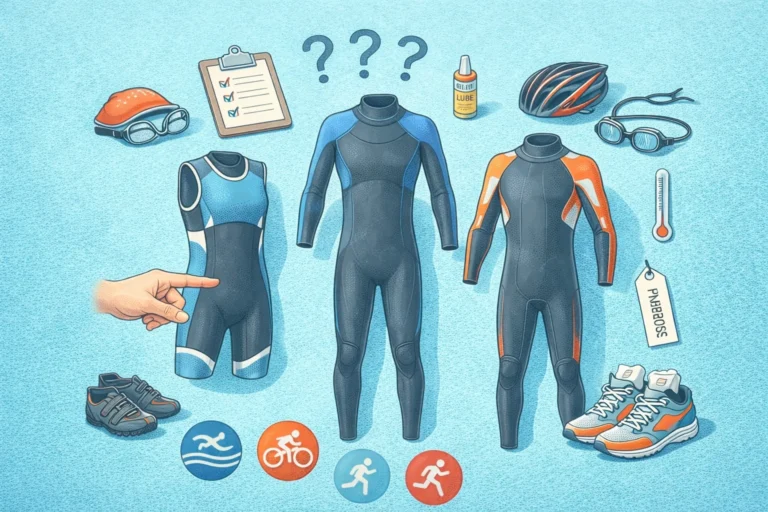
Choosing the right wetsuit can change your open water swim and your race result. This triathlonhealth wetsuit comparison gives clear, practical guidance to help you pick a wetsuit that fits, supports your swim, and matches your budget. Read on for the features that matter, recommended models, and race-day tips.
We will compare fit, material, buoyancy, and price, and explain how each factor affects performance. If you want to buy a wetsuit that suits training and racing, this article lays out the choices and the trade-offs. Expect simple advice, test-based observations, and actionable buying tips.
Why a wetsuit matters
A wetsuit affects speed, comfort, and safety in open water swims. For many triathletes the swim can make or break the race. A good wetsuit helps with body position and reduces drag. That often leads to faster times and less fatigue for the bike and run.
Different wetsuits balance buoyancy and flexibility. Some give extra lift at the hips and legs, which improves streamline. Others prioritize arm mobility so you can keep a strong stroke over long distances. Knowing which balance fits your swim style is key.
Wetsuits also provide thermal protection. Water temperature and your tolerance both matter. Choosing the right thickness and suit design will keep you warm without locking your shoulders. For many athletes, that balance is the main factor when comparing options.
Finally, a wetsuit can affect confidence. A suit that fits well reduces drag and chafing, and keeps you focused on pace and sighting. That steadiness matters on race day. This triathlonhealth wetsuit comparison focuses on items that influence real performance.
Key features to compare
Before you read model comparisons, you need to know which features change performance. I list the key features below so you can judge any wetsuit you try. These features are the difference between a suit that helps and one that holds you back.
Think about fit, flexibility, buoyancy, thickness, seam construction, and price. Each feature has trade-offs. A thicker suit gives more lift but lower arm mobility. Tape or glued seams add durability but can raise cost. Fit rules them all because poor fit cancels out other benefits.
Below is a practical list of the most important features and what to look for when you try a suit on. Use this list to score suits while testing or reading reviews. The goal is to find a balanced option that fits your swim, distance, and budget.
When you compare models, note how each feature affects your stroke and body position. That note will guide your purchase. Here are the features to check.
- Fit and sizing: How snug is the suit around shoulders, chest, and legs? Watch for bunching at the crotch.
- Shoulder and arm flexibility: Look for flexible panels around the shoulders and thin neoprene at the arms.
- Buoyancy and panel layout: Where the suit lifts you matters. Hip and lower back lift helps body line most.
- Thickness: Common ratings are 1.5mm to 5mm. Thicker suits are warmer and more buoyant.
- Seams and construction: Glued and blind stitched seams reduce water entry and boost durability.
- Entry and exit: Rear zipper, chest zipper, or leg panels change how fast you can remove the suit on race day.
Types of triathlon wetsuits
Not all wetsuits are made for racing. There are training suits, race suits, and hybrid suits that try to mix benefits. You will find suits designed for beginner swimmers, for long distance, and for elite speed. Each has a place depending on your priorities.
Training suits are built to be durable and comfortable for many swims. They often use thicker neoprene in less active areas. Race suits push for more buoyancy and arm freedom, sometimes with premium materials. Hybrid suits aim for a middle ground that works for both training and shorter races.
A second important split is between full wetsuits and sleeves or wetsuit tops. Full suits cover arms and legs and give the most buoyancy. Short-sleeve suits give more shoulder freedom but less lift. Choose based on water temperature and swim distance.
Here is a short list that sorts suits by intended use. Use this to match a suit to how you train and race.
- Training focused: Durable, cost effective, slightly less flexible.
- Race focused: Lightweight, high stretch, strategic buoyancy panels.
- All-round: Balanced buoyancy, decent flexibility, good value.
- Open water specific: Extra thermal protection and buoyancy for cold water.
Fit and sizing
Fit is the most critical factor. A wetsuit must be snug but not painfully tight. Too loose and the suit traps water, which slows you down. Too tight and you will restrict your breathing and shoulder reach. Find the best balance through careful sizing and testing.
When you try a suit, move through the swim motion on land. Raise your arms, twist your torso, and bend at the hips. The suit should not bind at the shoulders. Check for bunching around the crotch and hips. If the suit folds, you lose buoyancy where you need it most.
Another fit point is the neck and zipper. The neck should sit close without cutting. A roomy neck leaks water and slows you. Zipper placement also affects removal speed. Rear zippers can be easier to get on, while quick-release systems may remove faster after the swim.
Get a professional fit if possible. Many specialty stores will measure your height, weight, chest, and shoulder width. Use those numbers to pick a base size, then try on multiple models. Each brand fits differently, so measure and test before you buy.
Material, buoyancy, and thickness

Neoprene type and panel design determine buoyancy and feel. High-end suits use Yamamoto neoprene or similar premium blends that offer high stretch and consistent buoyancy. These materials are lighter and thinner in key areas to free the shoulders while keeping lift at the hips.
Thickness is not a single number. Suits use varied thickness across panels. Common arrangements include thicker panels on the torso and thinner panels on the arms. This layout raises the legs and head while keeping arms free to rotate. Know the millimeter ratings and the panel map for any suit you compare.
Buoyancy helps your body position, but too much lift can alter your stroke timing. That can cause you to over-rotate or mis-time breathing. Aim for steady lift that keeps your hips high while allowing a natural stroke. For many triathletes, moderate buoyancy with high shoulder flexibility gives the best race-day speed.
Here is a short guide on thickness choices based on water temperature and race distance. Use these guidelines to narrow choices when you test suits.
- Cold water (below 60 F / 15 C): Thicker suits, 4mm to 5mm, or suits with extra torso insulation.
- Cool water (60 F to 68 F / 15 C to 20 C): Mixed thickness suits with thicker torso panels and thinner arms, 3mm to 4mm overall.
- Warm water (above 68 F / 20 C): Short-sleeve suits or thin full suits, 1.5mm to 3mm. Check race rules on wetsuit use.
triathlonhealth wetsuit comparison: top models
Below I compare a range of wetsuits that serve different needs and budgets. The models chosen are common recommendations among triathletes and testing groups. Use these comparisons to pick a category, then test for fit and feel.
Each model has trade-offs. Some suits are best for elite performance with high cost. Others give strong value and durability for regular training. In this section I highlight what each suit does well and where it compromises.
When you read the model notes, focus on fit, shoulder flexibility, and where the suit creates lift. A suit that helps your hips and legs without locking the shoulders will usually save the most time. My recommendations pair suits to swim speed, body type, and budget.
Here is a short list of representative models and who they suit best. These entries are general and depend on your personal fit and size, so test before you buy.
- Premium race suit: High-stretch neoprene, targeted buoyancy panels, very flexible shoulders. Best for fast swimmers who want every second back. Expect higher cost.
- High-value race suit: Strong balance of lift and flexibility, less expensive than the premium options. Good for competitive age-groupers.
- Durable training suit: Thicker neoprene in non-critical areas for longer life. Great for daily open water practice and cold swims.
- All-rounder: Comfortable fit, moderate buoyancy, and reasonable price. Ideal for triathletes who do both training and racing.
Price and value
Wetsuit prices span a wide range. You can buy a functional training suit for a lower price, or invest in a premium race suit that costs significantly more. Price alone does not guarantee fit or speed gains. Value comes from the right suit for your needs.
Consider how often you swim in open water. If you train in a wetsuit multiple times a week, a durable mid-range suit often provides the best long-term value. If you need top speed for short races and open water practice is less frequent, a high-end race suit may be worth the cost.
Also factor in resale value. Premium suits from reputable brands often retain value if you keep them in good condition. That can offset some of the initial cost when you upgrade. For athletes on a tight budget, used suits in good condition can also be a practical option if you confirm the fit.
To judge value, compare how a suit performs in your swim sessions and races. Track open water times with and without the suit, and note comfort. A suit that saves a minute over a swim while fitting well is often worth the extra cost for competitive athletes.
Care and maintenance
Proper care extends the life of your wetsuit and keeps it performing. Rinse the suit in fresh water after every swim. Salt, chlorine, and sand will degrade neoprene and seams over time. Rinsing removes residues and reduces odor.
Dry your suit inside out first, then finish outside away from direct sun. Direct sunlight will break down neoprene faster. Store the suit flat or on a wide hanger to avoid stretching the shoulders. Never fold your suit tightly for long storage periods.
Repair small cuts and seam issues quickly. Many wetsuit-friendly glues and repair kits work well for minor damage. For major seam failures, see a professional repair or contact the manufacturer if the suit is under warranty. Regular checks prevent small issues from growing into big problems.
Here is a clear step-by-step care list you can follow after each swim to preserve fit and function.
- Rinse thoroughly in cool, fresh water to remove salt and chlorine.
- Turn the suit inside out to dry the interior first.
- Hang on a wide, padded hanger or lay flat away from direct sunlight.
- If needed, treat with a wetsuit shampoo to remove odor and oils.
- Store in a cool, dry place and avoid sharp folds that stress seams.
Race day tips
How you use the wetsuit on race day can make a big difference. Practice transitions in training. That includes putting the suit on and taking it off quickly. Time saved in transitions adds to your overall race performance.
Warm up with short swims in the suit before you race. That helps you get used to the feel and any buoyancy differences. It also helps you confirm that the suit does not rub or cause discomfort under race conditions.
Use lubricant or a thin layer of talc in tight spots to speed entry and exit. Test removal in practice so you know where to pull and how to break the seal. Work on one-arm stripping drills to shave seconds during the transition from swim to bike.
Here is a short checklist to run through on race morning so your wetsuit works for you and not against you.
- Confirm suit fit and freedom of shoulder movement with a quick warm-up swim.
- Practice a fast removal sequence so you can strip the suit on the run to transition.
- Have a towel and a volunteer or bag to drop the suit into for a fast mount out of transition.
- Keep a small bottle of fresh water to rinse the zipper if it sticks.
Key Takeaways
This triathlonhealth wetsuit comparison shows that the right suit depends on fit, flexibility, and the balance of buoyancy. No single suit is best for every athlete. Your body shape, swim strength, and race distances determine the ideal choice.
Test multiple suits and focus on how each one affects your body line and stroke. Prioritize shoulder mobility and steady hip lift. For frequent open water training, choose durability. For race performance, pick high stretch materials and strategic paneling.
Proper care and race practice with the suit are essential. A well-maintained suit that you have practiced in will give you confidence and better times. Use this comparison as a checklist while you try suits on, and remember that fit beats features if you must choose.
Make your final decision based on testing and comfort. When you find the suit that fits your swim and your plan, it will reward you in training and on race day. Good luck, and enjoy the water.