
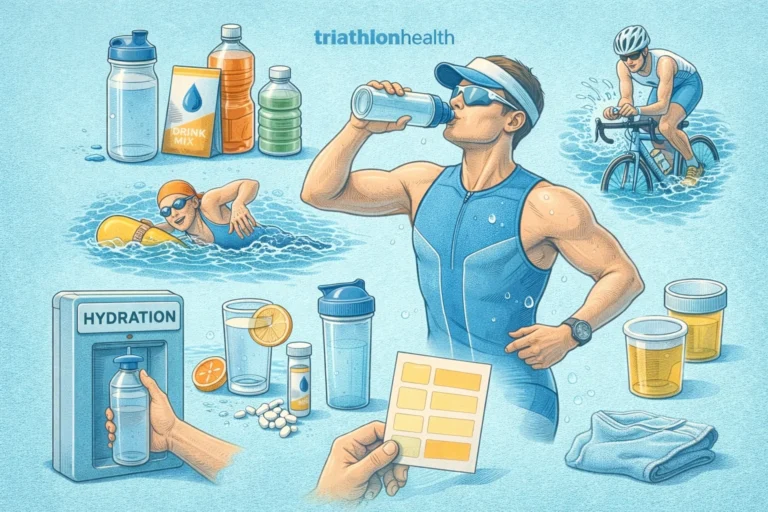
Hydration can make or break a triathlon day. This article explains practical steps for hydration for triathlon health, so you can train hard, race well, and recover fast. Read on for clear plans, easy checks, and tips you can use in training and on race day.
Why hydration for triathlon health matters
Hydration affects energy, focus, and how your muscles work. When your body loses too much fluid, your heart and lungs work harder. That drains energy and slows you down. For triathletes, the impact is bigger because you move through three disciplines in one event.
Good hydration supports pacing and heat control. On hot days, fluid balance helps your body move heat away from your core. That lowers the risk of heat illness. On cool days, fluids still matter because sweat and breathing remove water and salts.
Hydration also affects recovery. Proper fluids support repair of muscle and replacement of lost electrolytes. That helps you train more consistently and reduces the chance of illness. If you skip this, training quality drops and injuries can follow.
Hydration for triathlon health is part of overall training. It links directly to nutrition for triathlon health and your race plan. Get hydration right and the rest of your plan works better.
How the body loses fluid during a triathlon
Sweating is the main way athletes lose water. Intensity, temperature, humidity, and clothing change how much you sweat. Hard efforts and hot conditions increase sweat rate a lot. Even in cool races, long time on course adds up.
Breathing also removes water. When you breathe hard, you lose moisture in the air you exhale. This applies across swim, bike, and run. Swimmers can also lose water if the pool or wetsuit cause extra heat stress.
Gastrointestinal losses happen too. If you vomit or have diarrhea from poor nutrition or illness, you lose fluid fast. Some athletes lose fluid through urine if they drink a lot without replacing electrolytes properly.
Knowing these loss routes helps set a plan. Track sweat, note conditions, and watch for signs of imbalance. Then match intake to need during training and racing.
Measure sweat and fluid needs
One reliable way to estimate needs is a simple sweat test. Weigh before and after a 60 minute session without drinking. The change in body mass shows net fluid loss. Add any fluid you drank to get total loss in that hour.
Do this in several conditions. Use your training bike, a run session at race effort, and a hot day outing. That gives a range of sweat rates. For most athletes the sweat rate will fall between 0.3 and 2.0 liters per hour, but individual results vary.
Once you know your sweat rate, adjust for race time and conditions. Multiply sweat rate by expected race hours. Then add a safety buffer for heavier sweat or stronger effort. Start practicing this plan in training to find what feels right.
Use weight checks as an ongoing tool. Weigh before and after long bricks and intense sessions. Keep a log of conditions and fluid intake. Over weeks you will see patterns and refine your plan.
Hydration needs by race distance and conditions
Different race lengths need different approaches. A sprint needs less total fluid than an Ironman. But intensity, heat, and personal sweat rate change needs a lot. Plan by time and effort, not just by distance.
For short races under an hour, small sips before and after most often work. In middle distance events, sip regularly during the bike and take fluids at aid stations on the run. For long courses, set a steady schedule for both fluid and electrolytes.
Conditions matter. Hot humid days increase sweat and reduce evaporation. On those days you need more fluids and more salts. Cold days reduce thirst but do not remove sweat loss, so you should still drink on a schedule.
Below is a broad guideline to adjust for race time and conditions. Use it as a starting point, then tune it with sweat tests and practice sessions.
Suggested starting volumes per hour based on effort and heat:
- Low intensity or cool conditions: 300 to 600 ml per hour.
- Moderate intensity or mild heat: 600 to 900 ml per hour.
- High intensity or hot conditions: 900 to 1200+ ml per hour, depending on sweat rate.
Practical hydration strategies for training
Training is where you build the habit and test plans. Practice drinking from bottles and bike cages, and try different sports drinks. Practice takes the guesswork out of race day and reduces surprises.
Plan fluid stops into sessions. If you use a hydration pack, practice refilling it and pacing your sips. If you rely on bottles, practice grabbing and drinking while on the bike. On the run, rehearse taking small cups from friends or aid stations.
Avoid large, infrequent gulps. Small regular sips keep stomach comfort and steady blood volume. Large gulps can cause sloshing and cramping. They may also trigger nausea in high intensity sessions.
Here are practical training rules to follow. Read them, then apply them across training blocks.
- Weigh before and after key sessions to track sweat rate and hydration needs.
- Practice drinking at planned race intervals and volumes during bricks and long rides.
- Test different fluids, including water, electrolyte drinks, and small amounts of carbs to see what your gut tolerates.
- Adjust your plan for heat or higher intensity sessions.
Race day hydration plan

Race day needs clear planning. Know your intake targets for each race leg. Assign bottles and drink mixes to bike pockets. Use aid stations for top-ups rather than last-minute fixes.
Start hydrated but not overfilled. Drink a moderate amount two to three hours before start. Include a small pre-race sip 10 to 15 minutes before you begin, especially for long races. Avoid gulping a lot right before the start.
On the bike, set a timer or use cadence to remind you to sip. On the run, practice taking cups quickly. Have a backup plan if your preferred drinks are not available at aid stations. Most races offer water and a sports drink.
Below is a simple race timeline you can adapt to your race distance and sweat rate. Use it to pack bottles and gels so you are not improvising on course.
- 2 to 3 hours before: 300 to 500 ml of fluid with electrolytes.
- 15 minutes before: 100 to 200 ml sip if you need it.
- During bike: sip every 10 to 15 minutes, adjust volume to hourly target.
- During run: small sips at every aid station or every 3 to 4 km, and electrolytes as planned.
Electrolytes and drink selection
Electrolytes are salts your muscles and nerves need to work. Sodium is the most important during exercise. Potassium, magnesium, and calcium also play roles. Drinks with electrolytes replace both fluid and salts lost in sweat.
Sports drinks often combine carbohydrates and electrolytes. They help with energy and absorption. The right mix improves stomach comfort and steady power. Too much sugar or the wrong salt balance can cause GI distress, so test different brands and mixes.
For long races or very hot conditions, add sodium to your bottles or use tablets. For shorter sessions, water may be fine if you ate a balanced meal earlier. Pay attention to how your stomach reacts during practice sessions.
Here are simple selection rules to follow when choosing a drink:
- For sessions under 60 minutes at low intensity, water is often enough.
- For longer or harder sessions, choose a drink with 4 to 8 percent carbohydrate and added sodium.
- For very long races, aim for drinks plus gels or real food to meet energy needs, and increase sodium intake to match sweat losses.
Signs of dehydration and overhydration
Knowing symptoms helps you act early. Dehydration starts with dry mouth, thirst, and reduced urine volume. As it worsens, you may feel dizzy, weak, or have muscle cramps. Your pace and focus will drop.
Overhydration, or hyponatremia, happens when you drink too much plain water and dilute blood sodium. Symptoms include nausea, headache, confusion, and severe cases can be life threatening. This risk rises if you drink large volumes without electrolyte replacement on long, slow events.
Monitor early signs and respond. If you feel dizzy or lightheaded, slow down and take in fluids with electrolytes. If you see very pale urine or sudden swelling in the hands and feet after a race, seek medical help, as that may signal low sodium.
Below are common signs to watch for so you can adjust your plan quickly:
- Early dehydration: thirst, dry mouth, dark urine, mild fatigue.
- Moderate dehydration: dizziness, reduced performance, muscle cramps.
- Overhydration signs: persistent headache, nausea, confusion, bloating.
Integrating hydration with nutrition
Hydration does not work in isolation. You need a plan that includes fluid, salts, and fuel. Carbohydrate intake and food type affect how your stomach handles fluids. Practice what you plan to do during the race.
Many triathletes combine fluids with small amounts of solid or semi-solid food. Real foods can work well, especially on long days, but they take longer to digest. Match the food choice to effort, gut comfort, and race logistics.
Work with a triathlon meal plan that factors in both drink calories and solid foods. Use that plan in training to reduce surprises. If your stomach tolerates gels better than bars during high effort, follow that on race day.
Consider the following nutrition pairing tips for better hydration and fuel uptake:
- Match drink carbohydrate to intended energy needs and stomach tolerance.
- Sip electrolyte drinks rather than large volumes of plain water during long sessions.
- Space solid food and high-concentration gels to avoid stomach overload.
Foods and nutrients that support hydration
Some foods help hydrate because they contain water and salts. Fruits like oranges and watermelon add fluid and potassium. Salty snacks add sodium and can support fluid retention during long races.
Focus on balanced meals before long sessions. A mix of carbohydrates, proteins, and salts improves overall hydration and energy stores. That supports recovery and reduces the need to over-drink during training.
When planning meals, think of nutrients for triathlon health and choose foods that give both fuel and fluid. This reduces the need for high volumes from drinks alone and helps maintain a stable gut during effort.
Here are some practical food choices tied to hydration and recovery:
- Breakfasts: oats with milk, banana, and a pinch of salt.
- Snacks: yogurt with fruit or a small salted sandwich for long training days.
- Recovery: chocolate milk or a balanced meal with lean protein and starchy carbs plus vegetables.
Monitoring and adjusting hydration during a season
Hydration needs change with training load, weather, and fitness. Track your weight, urine color, and performance to identify trends. If you feel more tired than usual, check whether your hydration plan needs an update.
Keep a simple log after key sessions. Record starting weight, ending weight, fluid taken, and how you felt. Over weeks you will see patterns that show whether you are under-drinking or over-drinking for certain efforts.
Adjust by small steps. Increase or decrease hourly volumes by 100 to 200 ml and test the change. Change sodium by 200 to 500 mg per hour if you notice cramps or low energy on longer days. Small changes are safer than abrupt large shifts.
Use tools to help tracking, such as a bike-mounted bottle, a small notebook on race days, and smartwatches that remind you to drink. These make it easier to stay consistent and to follow your plan under race pressure.
Common hydration mistakes to avoid
Many athletes make similar errors. They either underprepare or overconsume plain water. Both reduce performance and increase risk. Learn from common mistakes and plan around them.
A common error is relying on thirst only. Thirst is a late signal and often means you are already behind. Another mistake is drinking too much water without electrolytes during long slow events, which raises hyponatremia risk.
Not testing drinks and food before race day is another big mistake. New gels, drink mixes, or salty foods can upset your stomach and ruin a race. Practice everything in training and have backup options that you know work.
Below are the top triathlon nutrition mistakes and how to avoid them. Read them and check your plan for each point.
- Relying on thirst alone, instead of a tested schedule.
- Drinking large volumes of plain water on long days without electrolytes.
- Not testing race nutrition and hydration together before race day.
- Ignoring environmental changes and not adjusting intake for heat or humidity.
Putting it all together: a sample plan
Here is a sample plan for a half ironman effort. Use it as a model and adjust by your sweat rate and food needs. Practice this plan in training bricks and long rides first.
Two to three hours before the start, eat a meal with carbs and some salt. Drink 300 to 500 ml of fluids with electrolytes. Continue sipping small amounts until 15 to 30 minutes before the swim.
On the bike, aim for your hourly fluid target split into small sips every 10 to 15 minutes. Take electrolytes in the bottle or as tablets if you sweat heavily. Start your carbohydrate plan early and take small doses often.
On the run, switch to aid station cups and continue electrolytes. Adjust your gel timing so you do not overlap high concentration drinks and gels at the same moment. Keep monitoring weight and urine in the days after the race to guide recovery.
Key Takeaways
Hydration for triathlon health is simple when you measure, practice, and plan. Start with sweat tests to find your needs. Use a schedule for race day and practice that schedule in training bricks.
Balance fluids with electrolytes and food. Test sports drinks and foods that fit your stomach. Avoid large volumes of plain water on long events. Watch for signs of both dehydration and overhydration.
Keep a simple log of weights and intake. Adjust for heat, humidity, and training load. Work your hydration plan into your triathlon meal plan and your overall nutrition for triathlon health.
Good hydration supports training quality, race pace, and recovery. Use these practical tips, avoid triathlon nutrition mistakes, and choose triathlon foods that help you stay strong from swim to run.