
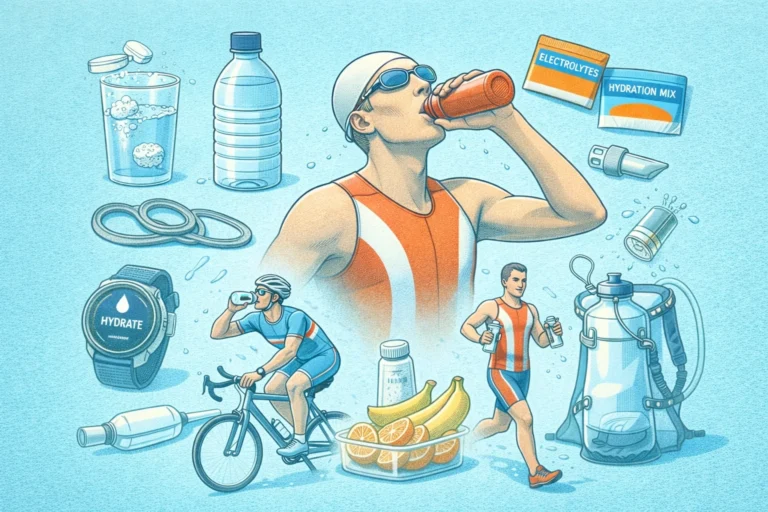
Hydration mistakes triathlonhealth can cost you time, comfort, and even finish lines. If you want to perform well in training and on race day, you need a clear plan for fluids and electrolytes. This guide explains why hydration matters, common errors athletes make, and practical steps you can use right away to stay better hydrated across swim, bike, and run.
Why hydration matters for triathletes
Hydration affects how your muscles work, how your brain thinks, and how your body cools itself. When your fluid levels drop, your power goes down and your perceived effort goes up. That means the same pace feels harder, and your splits may slow without any change in your training plan.
Good hydration also helps your body deliver oxygen and nutrients to working muscles. Triathlon is a long sport that stresses multiple systems, so even small losses of fluid can change the way you feel during a race. Fluids are part of performance, not just comfort.
Staying hydrated supports recovery as well. After a long session, proper rehydration helps muscle repair and restores the balance of electrolytes. This speeds recovery and keeps training consistent, which is how athletes improve over time.
Finally, hydration affects heat management. When you are hydrated you can sweat and cool more effectively. That lowers the risk of heat illness and helps you hold intensity in warm conditions. Planning fluids is a simple way to protect performance and safety.
Common hydration mistakes triathlonhealth
Many triathletes repeat the same hydration mistakes that cost them time and energy. These errors range from drinking nothing until you are thirsty to choosing the wrong drink during long efforts. Knowing these traps makes it easier to avoid them.
Some mistakes come from following rules that do not match your body or the environment. What works in cool weather may fail in heat. What a training partner drinks may not suit your sweat rate. Relying on generic rules without testing leads to problems on race day.
Other mistakes happen because of timing. Drinking too much right before a hard effort makes you feel uncomfortable. Drinking too little during a long ride sets you up for cramping and low power late in the race. Timing fluids matters as much as what you drink.
Below is a clear list of common errors to watch for, with a short note on why each one matters. Read this list and consider where you fall on each point.
Common hydration mistakes triathlonhealth include:
- Waiting until you feel thirsty, which means you are already dehydrated.
- Overdrinking plain water, which can dilute sodium and cause hyponatremia.
- Not testing sports drinks or electrolyte products before race day.
- Using a one-size-fits-all plan that ignores sweat rate and weather.
- Drinking too much right before a high intensity effort, which causes sloshing.
- Neglecting recovery fluids after long sessions, slowing repair and glycogen restoration.
How to measure your sweat rate and needs
One of the best ways to avoid hydration mistakes triathlonhealth is to measure your sweat rate. Sweat rate tells you how much fluid you lose per hour and helps you set a plan for training and racing. Simple tests at different intensities and temperatures give useful numbers.
To measure sweat rate, weigh yourself nude or in minimal clothing before and after a known effort. Record the duration and any fluids you drank. Subtract post-weight from pre-weight, add any fluid consumed during the session, and divide by the number of hours. That gives liters per hour, a practical figure to guide your drinks plan.
Repeat the test in different conditions. You will sweat more in heat and less in cool weather. You will also sweat more at higher intensity. Record sweat rate for both training and race intensities so you have realistic targets for each segment of a triathlon.
Once you know your sweat rate, plan to replace some but not all fluid losses during an event. Full replacement can be hard and sometimes unnecessary. Aim to limit body mass loss to around 2 percent during a race, adjusting based on how you feel and the conditions.
What to drink and when
Choosing the right fluids matters as much as the amount. Plain water helps during short efforts and in cool conditions, but longer training and races need carbohydrates and electrolytes. That keeps energy high and prevents sodium dilution and cramping.
Sports drinks come in many formulas. Look for a product that provides both carbohydrates and electrolytes. Carbohydrates help maintain energy, while sodium replaces lost salt and supports fluid retention. Practice with the product during training to make sure it agrees with your stomach.
Below is a practical list of drink types and when to use them. Read the list to decide what to pack for each session and race distance.
Recommended fluid options:
- Plain water, for short sessions under one hour or when you have a carbohydrate bottle and you are not sweating heavily.
- Sports drink with 4 to 8 percent carbohydrates for long rides and runs, to provide calories and some sodium.
- Electrolyte tablets or concentrated mixes when you know you sweat a lot of salt or will race in heat.
- Fluids with multiple carbohydrate types, such as glucose plus fructose, for events longer than two hours to increase carbohydrate absorption.
Fuel and electrolytes together
Hydration and fueling are linked. If you only focus on fluids and ignore calories, you may hit an energy wall. If you only focus on calories and ignore electrolytes, you may cramp or slow down in the heat. A combined plan is more reliable.
Triathletes often make nutrition mistakes triathlonhealth by separating their hydration and fueling plans. Planning both together prevents stomach upset and ensures steady energy. For example, use a sports drink during long rides that also supplies carbohydrates, then top up with gels or bars timed to your needs.
Carbohydrate timing affects how much fluid you need. Eating a heavy bar may require more fluids to move food through the gut. Use familiar combinations in training, and note which ones cause sloshing or cramps. Practice makes it easier to find a reliable race plan.
Consider macronutrients triathlonhealth when you plan recovery drinks. After a hard session, a carb-protein drink helps refill glycogen and repair muscle. Adding electrolytes to recovery fluids speeds rehydration, and improves how you feel the next day.
Race-day hydration strategy

Race day brings nerves and variables, which is why avoiding hydration mistakes triathlonhealth on the day matters. Create a simple, tested plan and stick to it. Keep fuel and fluids in the same spots you used in training so you do not have surprises.
Start race morning with a small, familiar breakfast and a measured amount of fluid. Avoid gulping large volumes before the start. Carrying a bottle on the bike is critical for long courses, and many athletes use a mix of water and sports drink to balance taste and calories.
During the race, follow rates based on your sweat rate, adapting for temperature and effort. If the course has aid stations, practice grabbing and drinking from them in training. Use reminders for when to take calories and fluids, such as every 15 to 20 minutes on the bike and every 3 to 4 kilometers on the run.
Below is a clear checklist you can use on race day. Use it as a pre-race routine to make sure you have the right products and timing plan.
- Confirm bottle placement on the bike and set expected sip intervals.
- Pack a mix of water and sports drink, or pre-mix one suitable product.
- Plan gel or bar timing, and tie it to points on the course or time intervals.
- Bring electrolyte capsules or tablets if you expect heavy sweating or long efforts in heat.
- Practice mid-race checks, such as mouthfeel and urine color during transitions or aid stops.
Signs of trouble and how to respond
Even with a plan, things can go wrong. Recognizing warning signs early helps you respond before performance drops too far. Signs include heavy fatigue, dizziness, headache, cramping, and confusion. Each sign points to different causes and different fixes.
Muscle cramps often come from a combination of dehydration, electrolyte loss, and fatigue. Immediate steps include slowing your pace, sipping an electrolyte drink, and gently stretching. If cramps persist, you may need to stop and rest until the cramp eases.
Dizziness and confusion are more serious, and they may mean low blood sodium or heat illness. If you or a teammate experiences these signs, stop and seek shade, sip a carbohydrate-electrolyte drink slowly, and get medical attention if symptoms do not improve quickly.
Mild hyponatremia symptoms can mimic fatigue and headache. To reduce risk, include sodium in your drink plan and avoid excessive plain water intake. If you suspect hyponatremia and symptoms are severe, stop drinking plain water and seek help from race medical staff.
Hydration for training and recovery
Hydration mistakes triathlonhealth often happen in training, not just on race day. Missing small but repeated opportunities to rehydrate after sessions slows recovery and blunts training adaptation. Make post-session fluids a habit.
A recovery drink that combines carbohydrates, protein, and electrolytes is efficient after long efforts. It helps refill glycogen and starts muscle repair while replacing sodium lost through sweat. Drink within 30 to 60 minutes after a hard session for the best effect.
Daily habits matter too. Regularly drinking water across the day supports training quality. Carry a bottle between sessions, monitor urine color as a rough check, and adjust intake around hot days or long workouts. Small steps add up to big differences over a training block.
Be careful with caffeinated drinks and alcohol around training. Caffeine is fine in moderate amounts and can help alertness, but do not rely on it to mask poor hydration. Alcohol is a diuretic and can slow rehydration after a hard effort. Plan clear boundaries for these substances around key workouts.
Practical tools and checks
You do not need fancy gear to avoid hydration mistakes triathlonhealth. A scale, a few bottles, and a timer cover most needs. Use simple tools to measure sweat rate, carry fluids, and remind yourself when to drink on long sessions.
On the bike, use a bottle with an easy bite valve and mount it where you can reach it without disrupting position. On the run, consider a handheld bottle, vest, or belt that fits your race style. Test each option in training so you know what works under fatigue.
Keep a small checklist for each ride and run. Note expected sip intervals, planned gels or bars, and which electrolyte product you will use. Bring spare tablets or a small container of powder in case temperature or effort changes your needs during the session.
Also use simple self-checks during and after workouts. Check urine color for a quick hydration snapshot. Track body mass changes in long sessions. Log how you feel during intervals and long efforts to refine your plan over time.
Common related errors in nutrition
Hydration mistakes triathlonhealth often appear alongside fuel mistakes. Athletes may use the wrong foods, the wrong timing, or the wrong mix of macronutrients. That leads to stomach upset and unreliable energy during races.
One common problem is ignoring pre-race hunger or fullness. Overeating close to the start can cause sloshing, while undereating leaves you low on glycogen. Practice pre-race meals and note what works at different start times and temperatures.
Here is a short list of frequent nutrition errors and simple fixes. Think of these as companions to your hydration plan, because fluids and calories must work together for best results.
- Using an unfamiliar gel or bar on race day, which can cause stomach upset. Test everything in training.
- Relying only on sports drinks without solids for very long races, which can leave you short on calories and cause energy dips.
- Not replacing sodium after salty sweat losses, which can cause cramps. Use electrolyte supplements when needed.
- Making pre-race nutrition mistakes triathlonhealth by trying new foods the morning of the race. Keep morning fuel predictable and light.
Planning with heat and cold in mind
Weather changes how you should hydrate. Heat increases sweat and sodium loss, while cold can blunt thirst and lead you to drink less than you need. Adjust your plan for temperature and humidity, and test those adjustments in training.
In hot conditions, increase electrolyte intake and plan more frequent sips. Use cooling strategies like ice in bottles or a soaked hat to reduce core temperature. These steps reduce sweat rate and can make your hydration plan easier to execute.
In cold conditions, you may sweat less but still need electrolytes on long efforts. Keep fluids from getting too cold if you are sensitive to that. Warm fluids can be easier to drink and provide comfort on chilly mornings.
Always watch for weather forecasts on race day. If conditions change, adjust your planned sip intervals and electrolyte use. Small changes in temperature can have big effects on sweat rate and performance.
Testing and tweaking your plan
No plan is perfect from the start. Avoiding hydration mistakes triathlonhealth requires trial and error, and you should test every product and timing approach in training. Keep notes and refine the plan over weeks, not hours.
After each long session, review what worked and what did not. Did you experience sloshing, stomach upset, or cramps? Did your pace drop in the final miles? Use those observations to change drink concentration, sip frequency, or the timing of calories.
Over time, you will build a set of reliable options. Have a primary plan and a backup plan for bad weather or stomach issues. When race day arrives, use the plan you practiced most and trust your training.
A final testing tip is to simulate race conditions, including clothing, nutrition, and pacing. Training in kit you will wear on race day reduces surprises and helps you spot hydration mistakes before they happen.
Key Takeaways
Hydration mistakes triathlonhealth are common, but they are also largely preventable. A small amount of testing, a clear plan based on sweat rate, and the right balance of fluids, calories, and electrolytes give you a big advantage in training and racing.
Measure sweat rate, practice products in training, and match fluids to the demands of each session. Pair hydration with fueling to avoid energy drops and stomach problems. Use simple tools like bottles, timers, and a scale to keep your plan reliable.
Prepare for heat and cold, watch for warning signs, and have contingency options if something goes wrong mid-race. Hydration is not just one action, it is a set of habits you build across a training block.
Finally, remember related phrases like nutrition mistakes triathlonhealth, macronutrients triathlonhealth, and pre-race nutrition mistakes triathlonhealth when you plan. They remind you that fuel and fluids belong together. Practice, adjust, and trust the plan you have tested the most.