
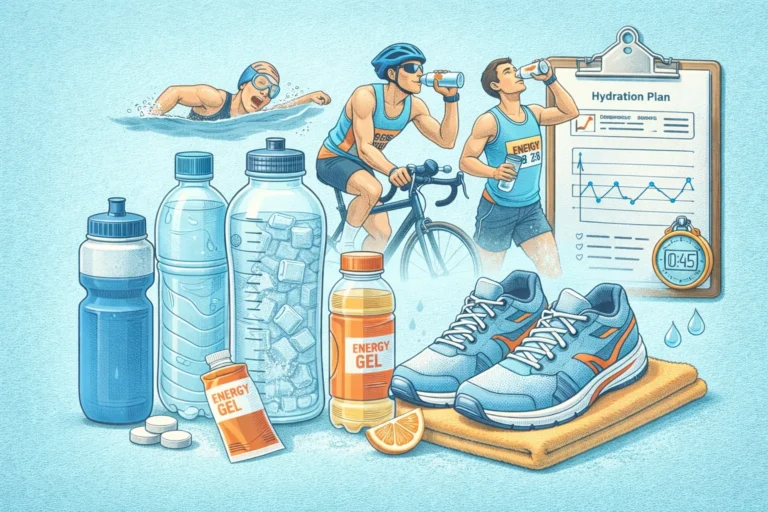
Hydration plays a central role in performance, training, and recovery for triathletes. When you read this article you will learn clear, practical steps to manage fluid and electrolyte balance for training sessions and race day. This guide focuses on hydration triathlonhealth, and it explains how to measure needs, test plans, and make adjustments for weather and intensity.
Hydration triathlonhealth basics
Understanding basic hydration helps you avoid common mistakes. Fluids keep your blood volume stable, support body temperature, and help deliver nutrients. When you do long sessions or race hard, small losses add up quickly and performance falls.
As a triathlon journalist and coach, I see athletes ignore simple signs. Thirst alone is a late signal. By the time you feel thirsty, you are already slightly dehydrated. A reliable plan can keep you in the optimal range for performance.
Hydration triathlonhealth is not only about water. Electrolytes, especially sodium, help maintain fluid balance. You will learn how to combine water and electrolytes to avoid cramps, dizziness, and poor pacing during training and races.
How much to drink: rules and testing
General guidelines give a starting point, but testing is the only way to know your true needs. Start with easy rules, then test during training to find what works for you. These steps will help you build a personal plan.
Before long sessions, aim to start well hydrated. A practical method is to check your body weight before and after a workout. The weight lost can be used to estimate sweat rate. Recording this over different conditions helps you plan fluid intake for races and hot days.
Hydration triathlonhealth planning uses numbers and small experiments. Expect sweat rate to change with intensity, gear, and weather. Measure on several training days to capture a range of conditions and then build a plan that fits your typical efforts.
How to measure sweat rate
Measuring sweat rate gives clear guidance on how much to drink during exercise. It is simple and science based. You will need a scale, clothes, and a stopwatch or training watch.
First, weigh yourself nude or in minimal clothing before a training session. Note the weight and the conditions of the session. Do the workout or ride without drinking, if safe, or drink a measured amount and record that amount. After the session weigh again in the same clothes. The weight loss plus any drinks consumed equals total sweat loss.
Repeat the test at different intensity levels and temperatures. Divide total sweat loss by training time to get a sweat rate in liters per hour. Use these numbers to guide race-day drinking. Keep a log with notes on clothing, wind, and humidity so you can match conditions later.
Electrolytes and what they do
Electrolytes are minerals that help nerves fire and muscles contract smoothly. Sodium is the main electrolyte lost in sweat, and it drives fluid balance. Low sodium can cause headaches, nausea, and confusion during long efforts.
Sports drinks combine fluids and electrolytes, and they are useful for long training sessions and races. Some athletes need extra sodium capsules or salt added to drinks. The need varies a lot from person to person, so testing is important.
When you plan hydration triathlonhealth, consider the electrolyte content of your drink and how much sodium you lose in sweat. If you cramp or feel faint despite drinking, you may need more sodium. If you feel bloated and puffy, you may be drinking too much plain water without electrolytes.
Pre-race hydration strategy
Pre-race hydration helps you start at the right level. A simple routine reduces risk and gives confidence. The goal is to start the race neither overhydrated nor underhydrated.
Two to three hours before start, drink 5 to 7 milliliters of fluid per kilogram of body weight. This is a guideline, so adjust based on your testing. For a 70 kilogram athlete, that equals about 350 to 490 milliliters. Finish sipping small amounts up to 20 minutes before the race, especially in hot conditions.
Pre-race sodium can help if you know you sweat a lot of salt. Some athletes use a light salty snack or a small amount of broth before the race. Practice this during training to avoid stomach issues. Hydration triathlonhealth planning means you test this exact routine so it feels normal on race day.
During-race fueling and hydration

Race hydration mixes fluid and energy. You need carbohydrates and electrolytes in races from sprint distance to Ironman. A proper plan keeps energy steady and prevents cramping and fatigue.
Use your sweat rate to decide fluid volume and the carbohydrate strategy to decide calories per hour. For most athletes, 30 to 90 grams of carbohydrate per hour is a useful range, depending on race length. Carbohydrate choices include gels, drinks, and real foods, all of which require fluids to aid absorption.
Before handing with a list, explain how to match drinks to race segments. Matching liquids to effort zones helps you stay hydrated and fueled without upsetting your stomach.
Here is a practical list of hydration and fueling options to use during a race. Use this list after you have practiced each item in training and confirmed it agrees with your stomach.
- Sports drink with 4 to 8 percent carbohydrate for both fluid and energy.
- Gels with 20 to 30 grams of carbohydrate, taken with water to aid absorption.
- Electrolyte tablets or salt capsules if you are a heavy sweat sodium loser.
- Small pieces of fruit or rice cakes for long events where solid food helps morale.
- Sip plan: small, frequent sips rather than large gulps to avoid sloshing and nausea.
Hydration for each discipline
Each triathlon discipline affects hydration differently. Swimming can mask sweat loss. The bike is where you can drink most easily. Running can cause more fluid loss per minute when heat stress builds. Planning for each leg prevents late-race problems.
On the swim you must rely on pre-race hydration and intake on the bike. Practice getting fluid on the bike at race pace. Set up bottles and practice grabbing and drinking while staying aero. Make note of how your stomach reacts to each product you use.
During the run, you will likely need small amounts of fluid often. Use the aid stations on course and train to grab cups or carry a hand bottle. Hydration triathlonhealth planning often uses a bottle on the bike with the main drink and quick sips at each run station to top up electrolytes and fluids.
Training day hydration plans
Hydration should be part of every training plan. Treat it like pacing and nutrition. Good habits prevent bad days and build confidence. The same rules you use on race day should be tested and proven in training.
For easy sessions, water may be enough. For long rides and hard workouts, use a mix of fluid and carbs. Practice replacing what you lose. If a two-hour ride takes more than two bottles of water, plan to carry or cycle to refill points for long courses.
Triathlon athletes often log training each day. Add hydration notes to your training log. Records like sweat rate, fluid amounts, and stomach tolerance help you refine the plan. Training under varied temperatures improves your ability to adjust on race day.
Signs of inadequate hydration and how to respond
Recognizing signs early prevents bigger problems. Symptoms vary from mild to severe. Know the common signs and the immediate steps to take during training and racing.
Early signs include thirst, reduced energy, and dry mouth. Later signs are headaches, dizziness, strong muscle cramps, or confusion. If you feel faint or confused, stop and get medical help. For most athletes, taking fluids and electrolytes reduces symptoms quickly when acted on early.
When you feel a warning sign, slow down and start sipping. If cramps appear, add sodium and reduce intensity. If symptoms do not ease with fluids and rest, seek help. Good preparation reduces the chance you will face severe problems in the first place.
Post-workout and recovery hydration
Recovery includes fluids, electrolytes, and carbohydrates to repair muscle and restore stores. Rehydration should start right after you finish and continue for several hours. The goal is to replace what you lost and return to normal weight within 24 hours.
We use the post-session weight method again. If you lost 1 kilogram during a hard session, drink about 1.25 liters of fluid in the next several hours. The extra accounts for ongoing urine losses and helps restore full fluid balance.
Include electrolytes when large sweat losses occurred. A recovery drink with sodium and carbohydrate helps refill glycogen and keeps fluid in the bloodstream. A balanced meal with protein, carbs, and salty foods supports recovery and reduces the chance of further fluid imbalance.
Practical tools and devices
Several simple tools make hydration management easier. Use them to measure, track, and test in training and racing. These tools are inexpensive and effective for most athletes.
A reliable scale is essential for sweat testing. A marked bottle or a hydration bladder helps you measure intake on the bike. A small notebook or phone app records conditions and amounts. These tools give you the data needed to refine your plan over weeks and months.
There are also wearable sensors and sweat patches that measure sodium loss. They can be helpful but are not required. Many athletes get excellent results with basic measurement and consistent record keeping. The key is testing and adjusting, not high-tech gadgets.
Common myths and mistakes
There are many myths about drinking more equals better performance. Drinking too much plain water can cause hyponatremia and impair performance. Too little fluid causes dehydration and limits power. Balance is the answer.
Some athletes avoid salt because they fear high blood pressure. For triathlon training and racing, sodium lost in sweat must be replaced. Short term sodium intake during exercise is very different from daily dietary salt concerns. Work with a coach or sports dietitian if you have medical conditions or concerns.
Another common mistake is changing products at race time. Your stomach will react. Practice all products in training and use the ones that feel best. The phrase triathlonhealth nutrients applies to the mix of fluids, electrolytes, and carbs you choose, and testing helps you find the right mix for your body.
Creating your hydration plan
Build a plan that fits your body, event distance, and the weather. A simple process works well: measure, test, adjust, and document. This method gives confidence and reduces surprises on race day.
Start with a base fluid plan from your sweat rate. Add carbs and electrolytes based on race length and how much you lose in sweat. Create variations for cool, moderate, and hot conditions. Label each plan so you can pick the right one before a race.
Practice the plan in two or three training sessions at similar intensity. If something feels off, tweak the amounts or the product. Good plans include a back-up option for when aid stations are sparse, and they include short notes about “fueling triathlonhealth” so you remember how fluid and carbohydrate choices work together.
Putting it all together for race day
Race day should feel routine. A tested hydration plan reduces stress and allows you to focus on pacing and technique. Pack your bottles, run a final check of your supplies, and follow the pre-race routine you practiced.
On race day, start with your tested pre-race drink, follow your bike sip plan, and use aid stations on the run as practiced. If weather changes, shift to your hot-day or cool-day plan. Keep notes after the race so you can refine the plan for the next event.
Remember that hydration and nutrition interact. A clear plan that mixes fluids, electrolytes, and carbs helps you finish strong. Practice, record, and adjust until you find what consistently works for you.
Key Takeaways
Hydration triathlonhealth is about testing and consistency. Use simple measurements like weight change to estimate sweat rate and build a plan that matches your pace and conditions. Practice that plan often so it becomes second nature.
Electrolytes matter, especially sodium, when you sweat heavily. Sports drinks, salt capsules, and salty snacks can all be part of a plan. Balance fluids and electrolytes to avoid both dehydration and overhydration.
Keep good records of training conditions, drinks used, and how you felt. Over time, those notes will make your plans more precise and more reliable. Fueling triathlonhealth and triathlonhealth nutrients are part of a holistic approach that improves performance and recovery. Test, adjust, and trust the data you collect so race day is predictable and strong.