
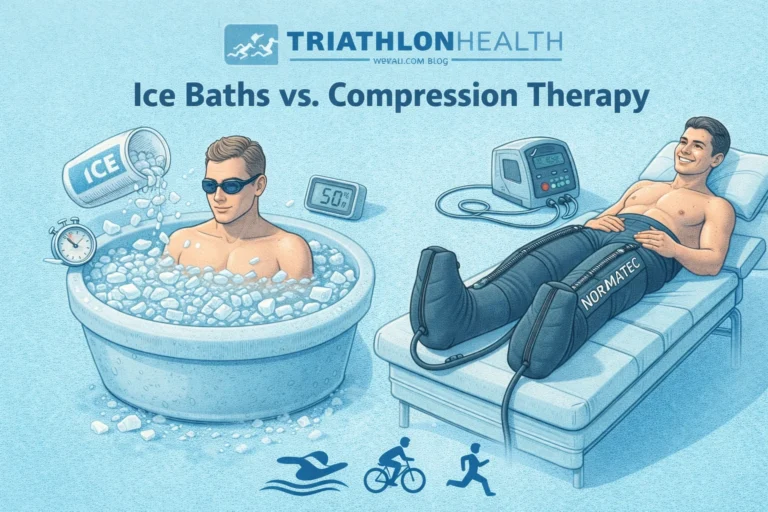
Athletes ask the same question a lot, ice baths vs compression triathlonhealth, which one should I use after a long ride or hard brick session? This article answers that question with clear science, practical routines, and product advice for triathletes. You will get pros and cons, real protocols you can try, and guidance to spend your money wisely.
ice baths vs compression triathlonhealth Overview
Ice baths and compression therapy are two of the most common recovery tools in triathlon. Both promise faster recovery, less soreness, and better readiness for the next session. The truth is more nuanced. Each method offers real benefits, but they work in different ways and suit different goals and budgets.
Ice baths use cold water to reduce swelling and limit inflammation after intense training. Compression therapy uses pressure to encourage blood flow back to the heart and reduce fluid buildup in the limbs. Athletes often pick one based on comfort, access, and the kind of training they do.
When you compare ice baths vs compression triathlonhealth, you should think about timing, the event schedule, travel needs, and personal preference. For example, an elite racer might choose compression between race legs, while a recreational athlete may find an ice bath more satisfying after a long session. Both can be part of a smart recovery plan.
Cost matters too. Simple ice baths are cheap and effective. High-end compression boots and electrical units cost more but save time and can be easier to use after flights or during quick turnarounds. This overview will help you match the method to your needs so you can make a confident purchase choice.
How Ice Baths Work
Ice baths, also called cold water immersion, rely on two main effects: vasoconstriction and lowered tissue temperature. The cold makes blood vessels tighten, which can reduce swelling in damaged muscle fibers and bring down local heat. When you get out, blood flow increases again, which some athletes feel helps clear metabolic byproducts.
The typical ice bath lasts from 5 to 15 minutes at temperatures between 10 and 15 degrees Celsius. Shorter durations and milder temperatures are common for beginners. The goal is to reduce acute inflammation without freezing yourself. Start conservative and build up exposure as you learn how your body responds.
Ice baths are quick and immediate. That can be useful after a hard race day or a long training block. Some triathletes report less delayed onset muscle soreness after regular cold immersion. Others say the benefit is mainly psychological, as the cold feels like it helps recovery and forces a strong mental reset.
There are limitations. Cold can blunt adaptation to training if you use it too often after key workouts. For athletes aiming to build speed and strength, frequent cold after quality sessions may slow gains. Think of ice baths as a tool for rapid recovery and race readiness, rather than a daily habit after every hard session.
How Compression Therapy Works
Compression therapy includes garments or devices that apply pressure to limbs. The pressure helps move fluid and venous blood back to the central circulation. This lowers swelling and can reduce the feeling of heavy, tired legs. Some devices add pulsed pressure to mimic muscle pumping and boost circulation further.
Compression garments are low tech and include socks, sleeves, and tights you can wear during travel or rest. Pneumatic systems are higher tech and use sequential compression, inflating chambers in stages to push blood upward. These are common in recovery centers and with pro teams because they can target large muscle groups with controlled pressure.
Compression is gentle on adaptation. It rarely blunts training gains, so athletes can use it more often without worrying about lost progress. It also works well in settings where you cannot sit in a tub, such as hotels, airports, or team buses. That convenience makes compression a popular choice for travel and multi-day races.
One drawback is the cost of advanced systems. High-end pneumatic boots can be expensive. Basic compression socks are affordable but offer less of the pulsed effect you get from a device. So pick the level of tech that matches your schedule, budget, and recovery targets.
Evidence and Practical Science
Research compares both methods in many studies, but results are mixed. Most trials show short-term benefits for soreness and perceived recovery with both cold water and compression. Few studies show large performance differences after repeated use, and effects vary by sport, training load, and timing.
Ice baths often reduce markers of inflammation right after use, but repeated cold exposure after strength or speed work can reduce some training adaptations. That means timing matters. Use cold to get ready for another hard effort soon, but avoid routine cold right after a session focused on long-term strength gains.
Compression studies generally show improved circulation and lower swelling. There is evidence for reduced muscle soreness and faster perceived recovery as well. Compression tends to be safe for frequent use and can be combined with sleep and nutrition strategies without much downside.
When you plan recovery, think about the session’s goal. If the day was max effort and you need to race or train again soon, prioritize fast recovery tools like ice baths or compression. If the day was about building fitness, prioritize rest and minimal cold exposure so adaptations are not reduced. Use the science to match the tool to the goal.
Practical Use and Protocols

Below are simple, athlete-friendly protocols for each method. These routines are short, clear, and repeatable. They are meant for triathletes who want steps they can follow on race week, travel days, or after big training sessions.
Ice bath protocol. Start with a comfortable baseline. Fill a tub with cool water, then add ice slowly if needed. Aim for water temperatures between 10 and 15 degrees Celsius at first. Sit so your lower body is immersed and time 5 to 10 minutes. Breathe slow and steady. Stand up carefully, towel dry, and allow 10 to 15 minutes of warm rest before more activity.
Compression protocol. For compression socks after a long ride, put them on within an hour of finishing. Wear for several hours or overnight if comfortable. For pneumatic devices, use a 20 to 40 minute session at a pressure recommended by the manufacturer, often between 30 and 60 mmHg. Use sequential settings for best fluid movement.
Combining both. Use ice baths when you need a fast, strong recovery effect, and use compression when you need convenience and travel-friendly solutions. You can also use compression after cold to maintain circulation, but avoid using both right after key strength workouts to protect training adaptations.
Best Products: ice baths vs compression triathlonhealth Guide
Choosing the right product depends on budget, space, and how often you travel. Below is a clear guide to product types and what to look for. Read each short description to match a product to your scenario and training load.
Portable ice baths are great for athletes who travel to races or train away from home. These are inflatable or foldable tubs that fit in a car or hotel. Look for durable material, easy drainage, and enough depth to cover your legs and hips. They are cost effective and offer the real cold water effect.
Home cold tubs are larger and sturdier. They can be filled with ice and used year round. Some athletes invest in built-in chiller systems that keep water at a set temperature. These are more costly, but they offer convenience and consistent control. Consider the footprint in your garage or training space before buying.
Compression options range from budget compression socks to premium pneumatic systems. Socks and sleeves are cheap and useful for travel. Pneumatic boots and leg systems give the sequential pressure most similar to active recovery. If you travel often or have tight recovery windows, a pneumatic device can be a smart buy.
Here is a concise list to help you compare product categories and make a buying decision based on how you train and travel.
- Entry level: Compression socks and sleeves, affordable and travel friendly.
- Mid range: Portable ice tubs, good for race travel and occasional use.
- High end: Pneumatic compression systems and home chiller tubs, best for heavy training loads and frequent use.
Comparing Cost, Convenience, and Effectiveness
Cost is a big factor for many triathletes. Compression socks cost under 50 dollars. Portable ice tubs can be under 200 dollars. Pneumatic systems and home chiller tubs can cost from several hundred to several thousand dollars. Think about how often you will actually use the gear before buying.
Convenience often decides the winner. Compression wins on convenience because you can wear it during travel and even while seated. Ice baths require setup, water, and space. If your life includes frequent travel, lightweight compression might provide more consistent benefit than a tub you rarely set up.
Effectiveness is task specific. For acute inflammation and a feeling of deep reset, many athletes prefer ice baths. For ongoing fluid control and comfort between sessions, compression often feels better. Consider which benefit you value most and how each tool fits your schedule.
Also think about staff support at races. Some race venues offer ice baths or compression gear. If you have team support, you might access higher end gear without the purchase. If you are solo at most events, buy what you can use regularly on your own.
Combining Methods and Scheduling Recovery
It is common to use both tools during a training block or race week. Combining them can give you flexibility. For example, use an ice bath after a long race stage to reduce soreness, then use compression during travel to help maintain circulation. Each method can play a role without negating the other.
Plan the schedule around key sessions. If you have back-to-back hard days, prioritize fast recovery. Use a short ice bath or a pneumatic compression session to be ready for the next day. If you have a rest day or a session focused on adaptation, skip the cold to keep the training stimulus intact.
Night and sleep matter too. Good sleep supports all recovery methods. Try to optimize rest with consistent bed times and quiet surroundings. You can use compression socks when you sleep on long travel nights, but avoid tight devices that cause discomfort. If you track sleep, add recovery practices as part of your triathlonhealth recovery routine so you can see trends.
Recovery is also more than gear. Nutrition, hydration, and active recovery still matter. Use gear like ice baths and compression as part of a broader plan that includes rest, targeted workouts, and good sleep triathlonhealth strategies to get the most from your training.
Practical Buying Checklist
Before you buy, run through a simple checklist. This helps you avoid common purchase mistakes, like buying premium gear you never use or choosing a tub that is too small for your needs. The checklist below will guide practical choices for both ice baths and compression devices.
Here are the key points to check when choosing a product. Review each item and match it to your training style and budget. This short list will help you decide which category of product makes sense.
- Space and storage, measure where you will keep a tub or store compression gear.
- Frequency of use, buy up if you will use daily, buy simple if occasional.
- Portability needs, choose inflatable tubs or socks for travel.
- Budget and warranty, factor service and durability into any higher purchase.
Real Athlete Notes and Case Examples
Pro triathletes often combine methods based on race phase. During heavy race weeks they may use ice baths after key stages and compression between race legs. Recreational athletes often use what they can do consistently, like compression socks on flights and the occasional ice bath after a race.
One common pattern is to use cold for acute race recovery and compression for travel and daily post-ride comfort. That pattern suits many triathletes because it balances rapid relief with frequent convenience. It also spreads cost and use across different methods.
Another useful tip is to track how you feel after each method. Keep a short log of soreness, perceived readiness, and sleep quality after sessions that use ice baths or compression. These small notes help you build a personal triathlonhealth recovery plan that actually works for you.
Finally, prioritize what you will use regularly. The best gear is the gear you will use. If a premium device sits in a closet, it will not help. Choose tools that fit your routine and your travel patterns so they become part of your recovery habit.
Key Takeaways
Ice baths and compression each have a clear role in triathlon recovery. The best choice depends on your goals, budget, travel schedule, and how often you can use the gear. Both methods can reduce soreness and help you feel ready for the next session when used properly.
Use ice baths for fast, strong recovery after hard sessions or race stages when you need to be ready again soon. Use compression for convenience, travel, and frequent use without worrying about blunting training adaptations. Many athletes combine both depending on the situation.
When you buy, focus on products you will use. Portable options and basic compression socks are good entry points. If you train heavily and can commit to daily use, consider higher end pneumatic systems or a chiller tub at home. Pair any gear purchase with sleep triathlonhealth and nutrition strategies for the best overall outcome.
triathlonhealth recovery is about making choices that fit your life. Try simple protocols, record how you feel, and scale up gear as needed. For structured guidance, consider triathlonhealth recovery methods in your weekly plan so recovery decisions support both short-term performance and long-term progress.