
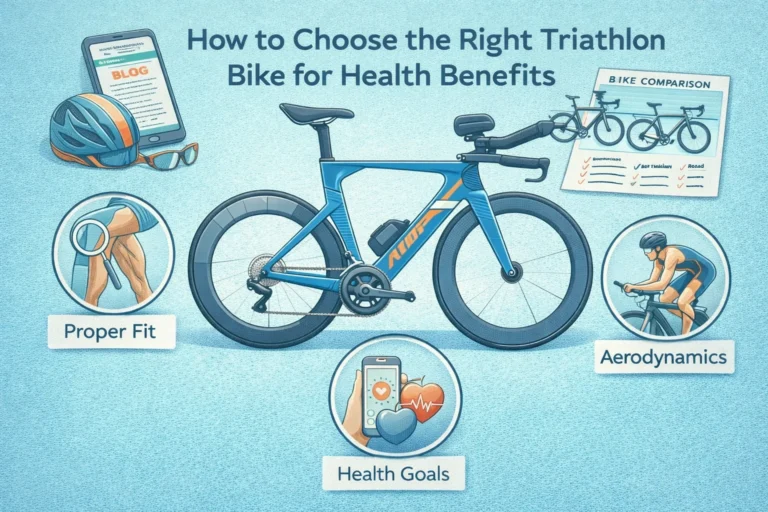
Choosing the right bike can change how you feel on race day and how your body holds up between races. This article covers triathlonhealth bike selection, and it explains how the right frame, fit, and features can protect your body, boost endurance, and cut injury risk. Read on for clear advice that helps you pick a bike that works for your health and your goals.
You will learn how different bikes affect posture, muscle load, and breathing. I write as a triathlon journalist with hands-on experience testing bikes and working with coaches and bike fitters. The tips are practical, and they focus on health as well as speed.
The guide includes bike types, fit basics, important parts, and buying tips. It also lists the gear to consider for training and racing. Keep the phrase triathlonhealth bike selection in mind as you move through the steps. This will help you make a confident choice.
triathlonhealth bike selection: Health benefits of the right bike
Choosing the correct triathlon bike affects your body in clear ways. A bike that fits reduces back strain, neck tension, and knee pain. It also helps you ride longer with better form.
Good positioning improves breathing and oxygen use. When you can breathe well on the bike, you maintain power and reduce fatigue for the run. This matters for health and race success.
A well-chosen bike reduces the risk of chronic issues. Over time, a poor fit can cause repetitive strain. A proper fit spreads load across muscles and joints in a safer way.
Comfort also affects mental health. If a bike feels steady and secure, you ride with more confidence. Confidence lowers stress, and it makes training more consistent and enjoyable.
Types of triathlon bikes and how they affect your body

Different triathlon bikes offer different riding positions and handling. Each style changes which muscles work hardest and how your spine holds up. Below I describe the main options and what to expect in terms of comfort and health.
Think about your race distances and your flexibility when you read these descriptions. Short course riders may choose very aggressive positions for speed, while long course athletes may prioritize comfort and endurance.
Use the list to compare the options and to match a type to your body and goals. The right match will keep you riding strong and reduce injury risk.
Common types include the following.
Here is a clear list of bike types with their health implications.
- Triathlon/TT bikes: These bikes are built for speed and aerodynamics. They put you in an aggressive, forward-leaning position. That position can be efficient, but it may increase neck and lower back load if your core and flexibility are limited.
- Aero road bikes: These offer a more forgiving geometry while keeping aerodynamic gains. They often suit riders who want speed and better comfort. They shift some load away from the lower back compared to full TT bikes.
- Endurance road bikes: These bikes have a more upright posture and extra compliance. They work well for riders focused on long-term joint health and comfort rather than pure aero shape.
- Time trial frames: This is a subset of TT bikes with very aggressive tube shapes. They maximize aero benefits but often require precise fit adjustments to avoid excessive strain.
Fit and biomechanics: Why fit controls health
Fit is the single most important health factor in triathlonhealth bike selection. A bike that fits you right balances power and comfort. It prevents overuse injuries and helps you maintain form through long rides.
Getting a professional fit can pay off in fewer aches and better performance. Fitters adjust saddle height, fore-aft position, handlebar reach, and stack. These changes alter how your muscles engage and how your joints load.
Even a small change can change knee angles and back posture. That can mean the difference between a pain-free ride and ongoing soreness. Take fit seriously before you buy a bike or after you switch frames.
If you are not able to get a full fit right away, start with basic checks. Confirm saddle height, knee tracking, and a comfortable reach. Then plan a pro fit soon after you commit to a bike.
Bike fit basics
Basic fit checks are simple, and they make a big difference. They are the first steps in triathlonhealth bike selection. Saddle height, saddle fore-aft, and handlebar reach are the key adjustments.
For saddle height, a common method is the heel-to-pedal technique. When your heel is on the pedal at the bottom, your leg should be nearly straight. This avoids excessive knee bend that can cause pain.
Handlebar reach affects your shoulder and neck position. Too far forward can cause tension and breathing limits. Too close can reduce power and put strain on your hands and wrists.
Position for health and power
Your riding position balances two goals: comfort and efficiency. An overly aggressive aero posture may improve speed but harm your back and neck if you are not conditioned for it. A more upright posture is kinder to the spine and can still be fast with modern aero shapes.
Core strength matters. A stronger core helps support an aerodynamic position without collapsing the lower back. If you want a low, fast position, build core and hip strength alongside your bike fit work.
Look for positions that let you breathe freely. If your chest is closed or your shoulders are cramped, you lose oxygen and fatigue faster. Good fit frees up the rib cage to move well.
Saddle and contact points
The saddle is a top health priority. The wrong saddle causes numbness, chafing, and back compensation. It also affects pelvic tilt and spinal alignment. So pick a saddle that matches your sit bone width and your riding position.
Contact points include pedals, shoes, handlebars, and the saddle. Each contact point transfers force and affects comfort. Pedal float, cleat position, and insole support all change knee alignment and hip drive.
Small tweaks at contact points often fix recurring issues. A pro fitter can measure cleat placement and suggest padding or a different saddle to reduce numbness and knee pain.
Components, materials, and technology that matter
Frame materials, wheel choice, and component quality influence the ride and health outcomes. Lighter frames ease climbs, while compliant frames reduce road shock to your spine and hips. Consider what matters most for your body.
Modern carbon frames offer stiffness where you want it and compliance where you need it. This reduces vibration and lowers long-term joint stress. Aluminum and steel frames can be very durable and more forgiving in some setups.
Wheels and tires also affect comfort. Wider rims and tires at lower pressures absorb more bumps. A smoother ride reduces hand, wrist, and back strain during long sessions.
Before listing components, remember that gear choice ties into your training style and body needs. Below is a list of items to prioritize when choosing a bike for health and performance.
- Frame fit and geometry: Choose geometry that matches your flexibility and goals. Endurance geometry helps reduce back and neck stress for longer rides.
- Saddle matched to sit bones: Use a saddle that fits your anatomy. This prevents numbness and encourages a stable hip position.
- Wheels and tire width: Pick tires that balance rolling speed and comfort, typically 28mm or wider for endurance-focused setups.
- Handlebar setup: Adjustable aerobars and bar extensions let you find a position that is both fast and safe for your neck and shoulders.
- Pedals and cleat setup: Proper cleat position reduces knee stress and improves pedaling efficiency.
Essential gear beyond the bike
A bike is a core piece of the puzzle, but gear around the bike also affects your health. A proper helmet, shoes, and hydration systems make long training sessions safer and more comfortable. These items help you train consistently and recover well.
When planning triathlonhealth bike selection, think about your entire kit. Aerobars, hydration, and a comfortable saddle template all matter. They change how your body handles long hours on the bike.
Below is a short list of related gear that will support your bike choice. This list includes items every triathlete should consider to protect their body and boost training quality.
- Comfortable triathlon-specific shoes with good foot support
- Well-ventilated helmet fitted to your head
- A hydration system that you can use in your riding position
- Padded shorts or chamois suited to your saddle
- Tools and spares to avoid long stops and bad positions during rides
For those who follow triathlonhealth resources, consider browsing reviews that mention essential triathlonhealth gear and triathlonhealth must-have gear to pair with your bike. Also, compare wetsuits and running shoes in other guides such as triathlonhealth wetsuit comparison and triathlonhealth running shoes to complete your kit choices.
Choosing a bike by budget and goals
Budget shapes choices, but health should guide priorities within your price range. A used bike with a great fit is often healthier than a new aero frame that does not fit you. Spend where it improves fit and comfort most.
Set clear goals. If you aim for long-distance races, prioritize comfort, stable handling, and reliability. If you race short, fast events, you may lean toward stiffer, more aerodynamic bikes, but plan fit and conditioning to handle the aggressive position.
Think about upgrade paths. A lower-cost bike with good geometry can be upgraded with better wheels or a fitting session. That gives health returns without immediate high expense.
Use the following list as a guide to where to invest money for the biggest health and performance returns.
- Fit session: One of the best investments for both performance and health.
- Saddle and shoes: Small purchases with big comfort gains, often cheaper than a new frame.
- Wheels and tires: Improve comfort and control through better rubber and rim design.
- Handlebar adjustments: Spacers, stem swaps, or adjustable aerobars help find a safer position.
Test rides, shops, and buying used
Always test ride before you buy. A bike can look good on paper but feel wrong on the road. Test rides reveal real comfort, handling, and fit issues. Try multiple models and sizes to find what suits your body.
Local bike shops are key. They offer test bikes, fitting services, and after-sale support. Work with a shop that knows triathletes and offers fitting expertise. That relationship improves bike health outcomes over time.
Buying used can be smart, but check the fit and frame condition carefully. Look for wear on the headset, bottom bracket, and rear dropout. If the geometry fits you and the frame is in good shape, a used bike can be a great value for health-minded riders.
When buying used, consider the cost of a full fit and any upgrades. Add those into the total price to see if the deal makes sense. A small upgrade like a better saddle or a fitting session can change a used bike into a health-focused machine.
Training tips to protect your body on the tri bike
How you train on the bike has a direct effect on injury risk. Balanced training includes strength work, mobility, and ride-specific drills. This approach guards your back, neck, and knees.
Start with shorter rides in a new position and gradually increase time in the aero position. This staged approach lets your muscles and connective tissues adapt. Sudden increases in volume or intensity invite pain and setbacks.
Include off-bike strength sessions focused on core, hips, and glutes. These muscles support the spine and stabilize your pedals. Regular mobility work for the thoracic spine and hips keeps your position comfortable.
Monitor niggles early. A small twinge that is corrected with a position or volume tweak is far better than letting it worsen. Good maintenance and body work reduce long-term problems.
Maintenance and long-term value of a health-focused bike
Regular maintenance keeps a bike safe and comfortable. Clean drivetrains, properly inflated tires, and accurate shifting reduce stress and allow smoother rides. Smooth operation means less compensatory body movement and less strain.
Keep a service schedule for the frame, fork, and headset. A well-maintained bike retains fit and handling qualities longer. This means you will keep health benefits across seasons without surprises.
Replace worn components that affect comfort, such as bar tape, saddles, and tires. These small items play a big role in how the bike feels and how your body responds to long sessions.
Think of your triathlon bike as a long-term health tool. A well-chosen, well-maintained bike supports consistent training, keeps injuries at bay, and helps you enjoy the sport for many years.
Key Takeaways
triathlonhealth bike selection focuses on fit, comfort, and your long-term health as much as speed. Choose a bike that matches your flexibility, goals, and budget to reduce injury risk and improve race performance.
Prioritize a professional fit, a saddle that matches your anatomy, and components that smooth the ride. These choices will have the biggest impact on how your body responds to training and racing.
Use test rides, work with a trusted shop, and plan upgrades where they improve comfort. Remember that gear such as essential triathlonhealth gear and triathlonhealth must-have gear supports your bike choice and overall health strategy.
With thoughtful selection and ongoing care, your triathlon bike will be a tool that helps you train consistently and race well, without unnecessary pain or injury. Keep the triathlonhealth bike selection checklist in mind as you choose, and prioritize health as you move toward faster, healthier racing.